- You are here:
- Home
- Blog
- General Sales Tips
- Sales Lessons From Roberto Martinez
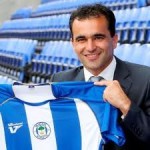
I was lucky enough to be invited to a lunch recently with the Wigan Manager, Roberto Martinez. I was impressed with both what he talked about, and his philosophy on the game. If you’re a regular reader you’ll know I’m a big fan of the link between sports performance and sales performance, so in this article you’ll find some of what Roberto said, and how it relates to sales. Enjoy!
Sales Lesson No 1 – Fans Are Really Important…
One of the most impactful things Roberto shared was that fans really make a difference. When your own fans are loud, it makes a difference to the team. Supportive fans give the players a ‘mental boost’ and a feel good factor – they make a massive difference to the players and how they feel.
 On the flip side, when your own fans are quiet, players make mistakes, negative comments from the crowd give impetus to the opposition, and affects both teams and the referee. So the fans are really, really important!
So in a sales context, who are YOUR fans? Who supports you when times are tough? Who gives you the ‘mental boost’ when you need it? Do you get that from your own company? Your friends and family? How about your own ‘inner voice?’ Does that support you? Or knock you down?
You can also use the the power of ‘fans’ in another way. Think about how often people are influenced or persuaded to do something (or at least be more likely to) by the behaviour of others! Think about how you can use that by including case studies or testimonials more in your sales efforts. Particularly if you can get them as a ‘reference site’ – so that prospects can call them, or you can get their testimonial on video, and have it on your iPad or laptop to show straightaway – very powerful.
Sales Lesson No 2 – Manage From The Technical Area!
One of the other guests asked Roberto a question regarding why managers watch games from the bench, rather than in the stand, where you can see more of the strategy of the game going on?
 Roberto’s answer was fascinating. He replied that he much prefers to ‘manage’ the game from the technical area, stood on the side of the pitch, as close as possible to the players. The reason for this is that you get to know the players and how they’re playing… he can tell from their breathing patterns if they’re tired, concentrating (or not), he needs to take them off or make a change in the team’s approach for example.
He finds this far more useful than watching from the stands – where you can see more of the ‘strategy’ of the game, but you don’t get the insight into the individual players as much.
So how does this apply to you? Well if you’re a manager, then getting ‘up close’ to your team members will definitely help you to understand what’s going on in their heads, their levels of motivation and confidence, how they’re applying their sales skills and tactics in meetings etc, rather than managing by ‘figures’ back in the office.
If you’re a salesperson, and don’t have that ‘hands on’ interaction from your manager, it’s about knowing yourself… when you need to re-energise…. and having tools like this blog, audios in the car or reading books regularly to keep your own levels of confidence and motivation up! Then putting them into practice in your own ‘technical area’ – your sales meetings!
Sales Lesson No 3 – It’s Harder To Manage When You’re Losing
One of the best comments of the day came from Roberto when he said ‘it’s harder to manage when you’re losing!’ Now that might seem an obvious comment to make, but it was the context in which he made it that was very insightful.
Roberto was talking about when he moved from Swansea to Wigan. One of the biggest things he had to get used to was losing! From going from Swansea (who at the time were winning the vast majority of their matches, 9 out of 11 before his move) to Wigan (who weren’t!) was a big change.
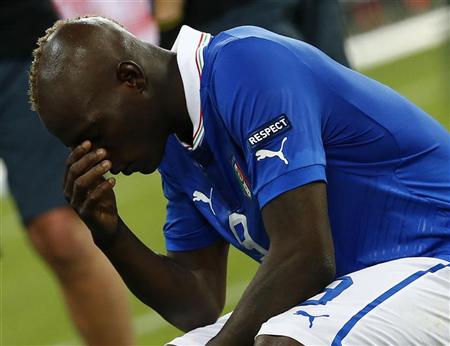 It wasn’t so much the players that were the difficulty – Roberto could work on their confidence and motivation – it was the non-playing staff at the club that were the bigger issue!
He went on to say that if a team doesn’t win in 2 months for example, motiving the non-playing staff is much more difficult that you would initially appreciate. It’s very easy for their heads to drop and get de-motivated, and that feeling spreads through the club really quickly if you’re not careful!
So think about you and perhaps your organisation (or the people you spend your time around most). Very often it can be the non-playing (non-sales) staff that are affected most when a company is struggling. The Customer Service staff when complaint levels rise. The Administration staff when orders are taken wrongly. Project Management or Operational staff when we’re trying to get something done ‘differently’ to the usual process. Management when the company doesn’t win the big deal they were hoping for.
We need to keep them motivated as well – especially if, as a salesperson, we rely on them to ‘back us up’ in delivering our products or services to customers and prospects! How motivated and helpful are your non-sales staff right now?
Sales Lesson No 4 – What Would You Do With More Resources?
One of Roberto’s most interesting comments came when the person next to me asked him ‘Roberto, if there was a takeover of Wigan right now and you had lots more money to spend, where (or who) would you spend it on first?’
 His answer was very interesting! Roberto said that the very first thing he would do would be to look at getting his younger, most promising players on longer-term contacts, on a higher wage, so that he could retain them longer and stop the ‘big clubs’ poaching them.
At the moment, as soon as one of his younger players plays well for a number of games, they suddenly start attracting the attention of the bigger clubs…. and the wages they offer (as well as the opportunity) mean that they often move on quickly. With more resource, Roberto would then be able to afford longer-term contracts and higher wages to be able to keep that talent for another season or two, which would have massive benefit for the club.
This was Roberto’s immediate preference in terms of spending money, rather than bringing in ‘bigger name’ players with a high transfer fee, his preference was to keep his existing culture and work with what he’s got for longer – rather than risk disrupting the culture that he’s worked hard to build, by bringing in a number of players from elsewhere at high fees – like many other clubs would do.
So if you had more resource at your disposal right now (money, assistance) what would you do? Would your first answer have been to work with what you already have? Improve the skills of yourself or your existing team members? Or is your immediate assumption something else?
Sales Lesson No 5 – Teams Adapt When You Play Well…
This was another great point Roberto made when he was talking about how other teams have ‘stepped up’ when they’ve come to Wigan this season. As a result of their run of wins at the end of last season, they were more on the ‘radar’ of other teams than before, and the other teams had adapted their play to counteract Wigan’s style.
Before the other teams would have concentrated on their own game, but now they were focusing on Wigan were trying to do as  well – and how to stop it! Whilst Roberto saw that as a great compliment, it also made things more difficult than before!
This also happens in sales. When competitors (and particularly competitors sales reps) don’t see you as much of a threat, they focus on themselves and their offering. When you become more successful (or win some clients from them) they suddenly start paying more attention to you, and selling against you.
That’s the exact time you need to step your own game up another level. The time your objection handling, negotiating and your other core sales skills need to come to the fore. The time you need to sell better against your competition again, and the time you need to ensure your own mindset isn’t affected! Game on!
Follow the tips above and watch your sales soar! I look forward to hearing how you get on……..
This article is copyright Andy Preston 2004-2017. To copy or syndicate this or any part of this article contact Andy Preston for guidelines.

Andy Preston
Named as one of the World's Top Sales Gurus, Andy creates 'Stand Out Salespeople' worldwide, with his revolutionary 'Stand Out Selling' Sales System. 'Stand Out Selling' helps salespeople stand out from their competition, win more business, and do so at higher prices!
Previously a trained Professional Buyer, then the Top Salesperson in the UK, Andy Preston has now trained more than 160,000 Salespeople, in more than 50 countries, on 6 continents, since 2004!
Andy is best known for his work in 5 specific areas...
1) Prospecting/Cold Calling/Business Development
2) Converting Incoming Sales Leads
3) Becoming The 'Stand Out' Trusted Advisor
4) Standing Out From The Competition
5) Helping Salespeople Close More Deals!
With more testimonials than any other Sales Expert online (320+ on LinkedIn alone), Andy's work is recognised worldwide.
You can contact Andy here for more information, and how he may be able to help you!
Andy's Recent Accolades.......
* The World's Top Recommended Sales Expert
* Ranked UK's Top Sales Trainer - LinkedIn
* #2 In The Top 20 UK Sales Blogs - Lolly.co
* Top Sales Expert - Geniecast
* Top Sales Influencer - WittyParrott
* Top Sales Experts To Follow On Twitter - Evan Carmichael
* 10 Sales Experts Every Salesperson Should Follow On Twitter - Etail Insights
Latest posts by Andy Preston (see all)
- How To Deal With The ‘Summer Holiday’ Objection…. - July 25, 2026
- Stand Out Selling Lessons – From Colombia, South America! - May 16, 2026
- 7 Tips To Get More Appointments From Your Cold Calls - April 17, 2026