All Posts by Andy Preston

Follow

About the Author

Andy Preston is a top International Sales Motivational Speaker, Sales Influencer and Master Sales Trainer. Named as one of the World's Top Sales Gurus, Andy creates 'Stand Out Salespeople' worldwide, with his revolutionary 'Stand Out Selling' Sales System. 'Stand Out Selling' helps salespeople stand out from their competition, win more business, and do so at higher prices! Previously a trained Professional Buyer, then the Top Salesperson in the UK, Andy Preston has now trained more than 160,000 Salespeople, in more than 50 countries, on 6 continents, since 2004! Andy is best known for his work in 5 specific areas... 1) Prospecting/Cold Calling/Business Development 2) Converting Incoming Sales Leads 3) Becoming The 'Stand Out' Trusted Advisor 4) Standing Out From The Competition 5) Helping Salespeople Close More Deals! With more testimonials than any other Sales Expert online (320+ on LinkedIn alone), Andy's work is recognised worldwide. You can contact Andy here for more information, and how he may be able to help you! Andy's Recent Accolades....... * The World's Top Recommended Sales Expert * Ranked UK's Top Sales Trainer - LinkedIn * #2 In The Top 20 UK Sales Blogs - Lolly.co * Top Sales Expert - Geniecast * Top Sales Influencer - WittyParrott * Top Sales Experts To Follow On Twitter - Evan Carmichael * 10 Sales Experts Every Salesperson Should Follow On Twitter - Etail Insights

Jul 14

5 Ways To Qualify Your Meetings Better

By Andy Preston | General Sales Tips

In this article, leading Sales Expert Andy Preston discusses 5 ideas that will help qualify your sales meetings with prospects better…..

Okay, so I’m a big fan of qualification. Qualification of the prospect. Qualification of the opportunity. Qualification of the individual. And most certainly, qualification of the meeting.

This is something that most salespeople miss (or are scared to do), that often comes back to haunt them later on in the sales process!

The task of qualification is made a little more difficult is someone else is making the calls for you, particularly if it’s not someone in your organisation, i.e. you’ve given the task to a telemarketing agency or similar. You now have two choices. You can either get the person making the initial call to do some qualification for you (if it’s an internal person) or make a call once the appointment has been booked to do some additional qualification yourself.

A good rule of thumb to use here is that the more time and energy you’re investing in an appointment (in terms of research, driving time, appointment time and paperwork), the harder you should qualify. Most salespeople should certainly thing twice about attending an appointment made for them “blind” – without much knowledge of the company, their potential needs or what they’re after.

If you haven’t made the appointment yourself, then it’s always a good idea to make a call to do some additional qualification. First of all, this will give you a good idea of the quality of the appointment, but it will also allow you to build up valuable rapport with the prospect and start to understand more about their potential needs – making the face-to-face meeting much easier.

Now I know some of you will be saying “But Andy, doesn’t that make it easier for them to cancel the meeting?” Yes, at some level it does. But let’s be realistic about it, an appointment that cancels when you ring them to do some additional qualification was very likely going to cancel anyway, or turn into a “no show” or an “I forgot you were coming”.

Also if it’s done in the right way, very few (if any) meetings cancel, and the ones that are attended are more serious!

So let’s take a look at the sort of things that we should consider qualifying or finding out before the meeting……

Qualification Question 1 – Is The Meeting With The Decision Maker/s?

I know this sounds obvious, but you’d be amazed how many appointments are booked with people who aren’t the decision maker for what you offer! There are many reasons for this, ranging from people being scared to ask the question, just assuming the person the person they’re talking to is the decision maker and even the old favourite “I need as many appointments as possible to hit my activity target, so any appointment will do!”

Qualification Question 2 – Is There A Budget For The Product Or Service I’m Offering?

Now I know this is not needed for most salespeople, but for some of my clients it’s essential! The larger the purchase and the longer the sales cycle would mean that there has to be some sort of budget set aside, or “financial sponsor” in place, otherwise the project has little chance of moving ahead.

Qualification Question 3 – What Are Their Expectations Of The Meeting?

Are they expecting you to come and do a presentation? Or come and look at their challenges and suggest potential solutions? Or are they interested in what you have to offer? Depending on what their expectations are, the meeting will need to be prepared for and conducted in a different way.

Qualification Question 4 – What Solutions Have They Already Looked At?

How have they tried to solve the problem already? Have they looked at any of your competitors? What are the other solutions they could do? (including doing nothing).

Qualification Question 5 – Have You Confirmed All The Appointment Details?

This is the last step and one of the most important! I’ve lost count of the amount of salespeople who’ve told me that they’ve arrived at the wrong premises, for an appointment with someone who works at another office! Make sure you confirm time, date, location, who will be attending, any equipment or facilities needed etc.

Obviously the suggestions on the list above are purely ideas of qualifying questions you could ask. Depending on your market, your role and your industry you will have various things that you may need to qualify before it’s worth going to an appointment – including distance, potential spend, potential of future business etc.

The exact questions asked are entirely up to you. Just make sure you ask them and start to qualify your appointments properly!

Follow the tips above and watch your sales soar! I look forward to hearing how you get on……..

This article is copyright Andy Preston 2004-2017. To copy or syndicate this or any part of this article contact Andy Preston for guidelines.

May 03

Sales Lessons From A Barber Shop…..

By Andy Preston | General Sales Tips

In this article, leading Sales Expert Andy Preston explains what sales lessons we can learn from a barber shop…. and we can do to implement the learning to improve our own sales figures….

Recently I needed to get my hair cut. Those of you that know me know that I like to keep my hair fairly short, and therefore go to my local village hairdresser about every 2 weeks or so. On this occasion, the hairdresser wasn’t able to fit me in, and as I was travelling all around the UK as normal, I needed to find a hairdresser in central London.

So what do I do? Use the internet of course! I knew I wanted more of a barber than a hairdresser, as I’d heard horror stories of central London prices for a simple cut like mine being £50 or more.

Starting The Search…..


Therefore I searched for barbers in the London postcode that my hotel was in and looked at a few. A few of those were eliminated straightaway as they didn’t have websites – there’s a lesson there about being accessible! I was only looking for simple information – opening hours and pricing, but if I can’t even get that, you’re unlikely to be winning much business from that source.

Anyway, I managed to find a barbers that I liked the look of, was local to the hotel that I was staying at and was able cut my hair for £35 – not bad in central London I thought. Therefore I made a note of the address and opening times, and decided arrive there the minute they opened to get my hair cut and make the rest of my appointments for the day.

Now, before I tell you any more, there’s something really important here. £35 is nearly 3 times the price I pay for my haircut at my local hairdresser at home. Why was I willing to pay nearly 3 times as much for perceivably the same service?

Andy’s Sales Lesson No 1 – Be Convenient

Firstly, I was willing to pay a much higher price, because it was convenient! I was able to get the information I needed in order to make a buying decision. How many of you are preventing your customers from making buying decisions right now?

How convenient are you to your customers? If they need you out of hours, can they get essential information on your website? This was the first lesson – in the example above, some barbers that were more local to my hotel missed out on my business because they didn’t have a website! I wasn’t looking for anything fancy, just some basic information.

If they didn’t have that, they missed out on my business. How much business could you be missing out on right now by not being “convenient” enough to your customers or potential customers?

Andy’s Sales Lesson No 2 – Demonstrate Value

Secondly, I was happy to pay a much higher price because the barbers I chose were able to demonstrate value. Whilst I was looking for the basic information on price and opening times, the look and feel of the website was able to demonstrate value to me.

Classic yet contemporary, I immediately felt I was not just going for a haircut, but more of a time to relax and unwind. They’d obviously spent time thinking about their target customers and what they wanted and this was evident when they’d had their website put together.

How often do you demonstrate value to your customers or potential customers? Or is your website just a list of your products and services?

Andy’s Sales Lesson No 3 – Motivate Your Buyers

Thirdly, I was happy to pay a higher price because the barber shop got me motivated to spend my money! Once I’d been on their website and seen what they were about, I actually became more motivated and excited about spending my money with them.

I was motivated by their company brand as well as what they offered in terms of products and services (they also sold shaving and grooming products).

How often do we think about what would motivate and excite our buyers? How often do we include this within our core messages, whether that be from our salespeople, our marketing or our website?

If we’re looking for our buyers to be excited, motivated, and enthusiastic we need to help make them that way! If they’re bored, tired or disinterested when they examine our products and services, is it any wonder they don’t buy, or don’t buy as much as they could?

Andy’s Sales Lesson No 4 – First Impressions Are Vital

Fourthly, think about how crucial the first impressions of your business are to your customers or potential customers. The first impression of your company may come from one of your salespeople, your website, your marketing literature or even perhaps their first “inbound” phone call to your business.

It is imperative that you get this right – that is if you want to maximise your potential new business opportunities. If you don’t create that positive first impression of our business you may be missing out on business that you didn’t know existed – from a lot of potential customers that have chose to “walk away” rather than spend their money with you.

And this unfortunately was where the barber shop fell down. They managed to do the other 3 points really well, but failed to impress on this point which will result in them losing business.

The barber shop in question opened at 9am, so I decided in my wisdom that I’d turn up at 8.50am in order to get my hair cut, then get on with the rest of my appointments for the day. Finally at 9.25am, just as I was beginning to wonder what on earth had happened (no one was answering the phone either) a guy came to unlock the door and said “do you have an appointment?”

Was I The Inconvenience?!!

What on earth was he thinking? Talk about destroying most of the “goodwill” and any positive impression the shop had already built up with me! He arrived 25 minutes late and was asking me if I had an appointment, as if it was my fault!

In one sentence (added to the fact he was late) he managed to destroy most of my positive impressions and potentially lose future profitable business. I did proceed with my haircut, but left feeling a little deflated and like my expectations hadn’t been met.

Which lead me to wonder….how many of you do that to your potential customers? People who actually want their problems solved? People that are actively looking to spend money with you on a regular basis and you do something that prevents that from happening?

You can also ask any questions about this article or sales in general, by contacting Andy here

Follow the tips above and watch your sales soar! I look forward to hearing how you get on……..

This article is copyright Andy Preston 2010-2019. To copy or syndicate this or any part of this article contact Andy Preston for guidelines.

Apr 12

Sales Lessons From A Cupcake Shop…..

By Andy Preston | General Sales Tips

In this article, leading Sales Expert Andy Preston explains the ‘sales lessons’ you can learn from a cupcake shop, and what you can put into practice……. right now…… to increase your sales…..

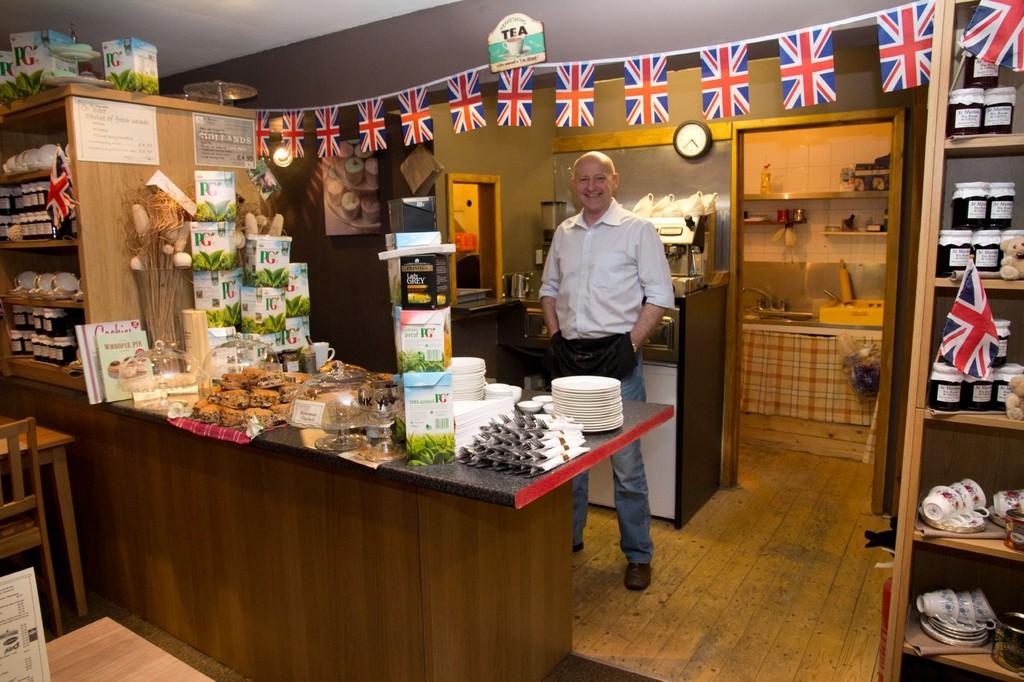
This particular ‘Sales Lessons’ article was inspired by a visit to St Martins Tea Room and Grill, Bowness-On-Windermere – located in the Lake District, Cumbria, UK. The owner, Stephen, had created some amazing cupcakes and was looking at ways of selling and promoting them (and his tea room) better.

While I was there I gave him a few ideas for the business….. and so far they have made a significant difference to the way he’s promoting and selling the cupcakes! So I thought I’d share some of the ideas in order that you all can use them to increase your sales as well!

So, here are some of the ‘sales lessons’ we can learn from Stephen’s ‘cupcake shop’….

Sales Lesson Number 1 – You Don’t Have To Have A ‘Unique’ Product

cupcakes tall

One of the first things to realise is that you don’t necessarily have to have a ‘unique’ product to gain a market (or sales) advantage. As business gets tougher, and markets become more competitive, the chance of your product or service being ‘better’ than the competition is small…… and getting smaller by the day!

The speed at which your competition can copy you, your products and your service is quickening by the day – so therefore any ‘market advantage’ you could gain isn’t likely to be an advantage for long!

So if you don’t have a ‘market’ advantage, you have to make your own advantage – by being better, faster or more specialised than your competition, or your competitors salespeople.

The cupcake is not a new invention….. nor is it ‘exclusive’ to Stephen and his tearoom, yet because of the way he’s selling and marketing his home-made offering, it’s making a massive difference to the amount of people he’s getting in his tearoom – and the amount of sales he’s making!

Sales Lesson Number 2 – You Have To Get Excited First!

Sales Tips by Andy Preston - Sales Training Expert

I’ve met Stephen a few times now, and whenever I see him, he’s always excited about what he does! If you’ve seen me speak, you’ll know I’m a big fan of being passionate and excited about what you do – because if you want others to be passionate and excited about what you do, guess where it has to come from first? That’s right, you!

The way Stephen talks about his cupcakes and other cakes, you can’t help but get ‘drawn in’ and you’re far more likely to purchase! How passionate and excited are you about your products and services right now?…..

Sales Lesson Number 3 – Make It A Good ‘Experience’

steve cupcakeFrom the moment you step into Stephen’s shop, you have a great experience! The food, the service and the quality all stand out! The cupcakes and other cakes are all home-made by Stephen himself and he takes time to ‘connect’ with every customer possible, so they’re coming back as much to see him as they are to experience the cupcakes!

By creating such a good, positive experience, Stephen is increasing the likelihood that people will return to his shop, and also tell their friends about it! This is where the real value comes in, as word-of-mouth advertising costs nothing, yet can be the most effective advertising of all!

What kind of ‘buying experience’ do you and your company provide your customers with? One that encourages them to ‘rave’ about how amazing you are to their friends and contacts? Or is it more of a ‘rant?’….

Sales Lesson Number 4 – Find Out Where Your Market Lives….

This is one of the most effective things that Stephen has done. When I originally met with him, I talked about the massive advantages Facebook could bring to his business. Now, those of you that have trained with me in the past know that I’m a MASSIVE fan of LinkedIn, but Stephen is selling business-to-consumer, not business-to-business, so that changes the ‘game‘ for him slightly….

His target market live on Facebook. They recommend and ‘share‘ things with their friends on Facebook. They post pictures of themselves with his cupcakes on Facebook! What better place to start his marketing and promotional activities, than somewhere his target market is already interacting?

Where does your target market ‘live?’ Are you marketing and selling to them in the most effective way at the moment?

Follow the tips above and watch your sales soar! I look forward to hearing how you get on……..

This article is copyright Andy Preston 2010-2017. To copy or syndicate this or any part of this article contact Andy Preston for guidelines.

Aug 10

5 Reasons Why You Struggle With Negotiation…..

By Andy Preston | Sales Management

In this article, leading Sales Expert Andy Preston explains why clients beat you down on price…… and what you need to do about it to get your profits back where they belong!….

As an ex-professional buyer, ‘negotiation‘ is always an interesting topic for me! Whenever I’m working with salespeople or business owners, they often fail to get the price for their products or services that they wanted – and often get even less than they deserve for their offering!

This has become even more true in the current market conditions – where savvy buyers and decision makers are looking to get the best value when they’re purchasing. Therefore to get good results, the salesperson or business owner has to be able to ‘stand their ground’ in a negotiation in order to get the price they deserve. Sadly, this often isn’t the case?

So why is it that the buyer or decision maker often has the ‘upper hand’ when it comes to negotiation?….

Andy’s Reason Number 1 – They’re Better Prepared To Negotiate

One simple reason why the buyer or decision maker often does better than the salesperson in a negotiation, is that they’re better prepared to negotiate than the salesperson is! Often a salesperson gets caught up in a negotiation when they aren’t ready for it – and this is a recipe for the salesperson losing the majority of the profit from a deal!

Most salespeople get negotiated with before they’re ready! So if you think that a meeting or phone call could result in a negotiation, make sure you prepare for it beforehand! If if a negotiation starts before you’re ready, don’t be afraid to postpone it and re-schedule it for another time when you’ve had chance to prepare!

Andy’s Reason Number 2 – You’re Too Desperate!

Another main reason that salespeople struggle to get better results from their negotiation is that on most occasions, they’re so ‘desperate’ to win the deal that this comes across to clients, and the clients use that as ‘leverage’ to swing the negotiation in their favour!

Prospects and clients can ‘smell’ desperation. It isn’t big. It isn’t clever. And it certainly isn’t attractive! One a client knows the salesperson is more ‘desperate’ to do the deal than they are, that’s just given them the ‘green light’ to get the best deal they can – at the expense of the salesperson!

It’s about time as salespeople that we got some pride back. And realised that prospects and clients often want to do the deal as much (or sometimes even more) than we do – but often we don’t know it….

Andy’s Reason Number 3 – You Fail To Spot Their ‘Tricks’

Sell New Products To Existing Customers : Sales TipAny buyer or decision maker worth their salt will attempt to play ‘tricks’ during a negotiation. If you can spot these and deal with them, then you’re usually fine. However, most salespeople aren’t even aware what the other party is doing, think that their ‘tricks’ are real, and end up falling for them!

I remember back to my days as a professional buyer, on my first ‘buying’ course. By the afternoon we’d been given a list of 5 tricks to play on salespeople to negotiate better deals, and squeeze their profit margins to a minimum. By lunchtime on day 2 it was 10. By the end of day 3 it was 20!! Can you see why some salespeople struggle to get the best deal when they’re negotiating!

If you can learn how the buyers and decision makers are ‘tricking’ you into losing profit, then learn how to deal with them, then you’re fine. Fail to identify them however, and you could continue to struggle……

Andy’s Reason Number 4 – You Don’t Know Enough About The Other Party

Another reason salespeople often come off worst in a negotiation is that they fail to find out enough about the other party before the negotiation starts! The buyer or decision maker might well have strong reasons for wanting the product or service the salesperson is offering, and strong reasons to purchase now!! But often the salesperson doesn’t find that out, and ends up ‘worse off’ in the negotiation.

Very often there are pressing issues, or demands on the buyer or decision maker’s time – which would force them to do a ‘quick deal’ – but often the salesperson fails to find that out! Therefore they end up the ‘keener’ party to do the deal – and often miss out on vital profit that could have been gained, had they bothered to find out more in the first place!

Andy’s Reason Number 5 – They Have More ‘Skills’ Than You

Think for a moment….. When was the last time you went (or sent a member of your team) on a professional negotiation skills course, lasting from between 1 and 3 days in total? A course that taught you all the ‘tricks’ a buyer or decision maker could play on you, how to spot them, and what to do about them? My guess is that it’s been a while….possibly never!

Think about the other side….. If they’re a professional buyer, you can GUARANTEE that they will have been on such a course. If they’re a decision maker in a business, they’re also likely to have been on a similar course! At the very least, they’re far more experienced at negotiation than you!

If you’d like to ‘right the balance’ and get an advantage over the other side in a negotiation, call Andy Preston now on 0161 401 0142 or contact us here – and we’ll happily help you and your team get back on top!

Follow the tips above and watch your sales soar! I look forward to hearing how you get on……..

This article is copyright Andy Preston 2004-2019. To copy or syndicate this or any part of this article contact Andy Preston for guidelines.

May 10

Send Me A Proposal – 7 Things You MUST Do First!

By Andy Preston | General Sales Tips

Write Successful Business Proposal

In this article, leading Sales Expert Andy Preston explains 7 things you need to consider finding out, before sending your proposal or quote to the prospect….

I’m often astounded when someone says ‘send me a proposal’ or ‘can I have a price on that’ to a salesperson, they go away and work on a proposal or quotation, then ‘blindly’ send it off to the prospect, just assuming it’s going to go ahead!

These same salespeople are the ones that wonder afterwards why they never hear from that prospect ever again!

If you follow these tips below, you and your team won’t get caught in that trap – and will not only convert more sales opportunities, but also be able to prioritise your time and have more idea which are likely to convert the fastest, for the most money!

So let’s have a look at the 7 things you MUST do, before sending that proposal….

Andy’s Tip No 1 – Establish FULL Specification Of The Project/Job

Full SpecificationThis might sound simple, but you’d be astounded how many salespeople fail to do this properly!  Most salespeople will get the majority of the specification down, but some have to call back a second time to get things they forgot, or that their colleagues tell them will be needed in order to produce an accurate quotation or proposal.  Some salespeople have to call back a third time to get information they failed to get on the second time!

You can imagine the impact this has on the prospect!  If you’re in a competitive market with other people ‘pitching’ for the work, you’ve put yourself on the ‘back foot’ before you’ve even started!  Not a clever move….

Andy’s Tip No 2 – Establish WHY NOW?  And WHY YOU?

These two areas are ESSENTIAL areas to question around in EVERY sales opportunity, not just at ‘proposal time’.  However, when someone says ‘send me a proposal’ and you DON’T get these answered, you’re setting yourself up for a fall.

You need to establish early on in your sales conversation how serious they are, and how serious the project/job is.  Even more important however is getting the WHY YOU bit answered.

The aim here is to uncover both the buying motivation, and also what chance you have of picking up this business!  Remember – the ‘fluffier’ the answers to the questions you ask here – the less likely you are to win the work!

Andy’s Tip No 3 – Establish Decision Makers and DM Process

The GatekeeperThis is again something that most salespeople fail to do properly!  Failure to establish the decision makers involved will mean that you could go all the way through the process, and then fall at the final hurdle as someone else comes in to influence the buying decision that you weren’t aware of!

Once you’ve identified the decision makers, you can then decide your approach for ‘engaging’ them.  It’s pointless knowing who they are without getting ‘airtime’ with them either over the phone or face-to-face, otherwise the same thing will happen as if you didn’t know who they were!

You also need to identify the process they’re going through in order to make the decision.  If they’re cagey about the process this time, it might be that the person you’re talking to is low-level in the organisation (and the decision).  In which case, simply asking about a previous process for similar projects will uncover most of what you need to know.

Andy’s Tip No 4 – Establish Their Other Options

Another word for ‘other options’ would be ‘competition’.  Yet I didn’t use the word ‘competition’ in the title because most salespeople then ask a question like ‘what other companies are you asking to quote on this?’

Get Ready For Competition!That’s a bad question because the person you’re speaking to will know that you’ll gain an advantage by knowing that information, so will usually say that they ‘can’t tell you’ or ‘it’s confidential’.  Therefore you need to ask the question differently 😉

Asking about the other options they’re considering will usually set the platform for you to get information about other potential suppliers/vendors.  It will also get you vital information about ‘alternative competition’ – either them finding another way to achieve the results they want, doing it themselves in-house, or not doing it at all!

In addition, any other project they could spend money on right now is ‘competition’ to your proposal being auctioned and approved – so question around this area as well….

Andy’s Tip No 5 – Establish Their Timescales

Sales Time Scales

Another area you need to question around is their timescales.  In order to find out how serious they are about this project, you need to find out when they’re looking to move ahead.

Most salespeople make the mistake of only finding out about when the clients want to implement the project, or when they need to take delivery of the product.  If you only get this timescale then you’re missing out on something that’s potentially more important!

The other timescale you need to ask question about to uncover is when they are looking to make their decision on the project.  Just because they don’t want to implement the project for a few months, doesn’t mean that they aren’t deciding on it quicker than that!  Make sure you understand the timescales they have to buy in order to give yourself the best understanding of how to handle the proposal, and give yourself the best chance of winning it!

Andy’s Tip No 6 – Establish Budget Or Funding

It’s VITAL in ANY sales opportunity, let alone a proposal situation, that you identify budget or funding as early as possible.  As most decent-sized projects require money from someone’s budget, or the company to have thought about how they’re going to pay for it, failure to identify this can mean the project ‘stalling’ at the last minute – when you’ve put lots of time and effort into it!

Make sure that you’ve got the ‘budget’ area covered and you’ll reduce the risk of the project being put on hold, or shelved – plus it may also bring to your awareness other people involved in the buying process that you weren’t aware of! 

Andy’s Tip No 7 – Establish Commitment

handshakeThe final (and most important part) of ANY sales situation, and even more vital at proposal stage!  Now for those of you with a short sales cycle, you could also think of the word ‘closing’ here.  For those of you on longer sales cycles, usually with higher-value items or projects at stake, think about gaining commitment to the next stage and to yourself and your company.

Failure to get commitment to the project and/or next stage, and also to you and your company will mean that you’re likely to be disappointed when it comes to announcing who won the business…..and who lost it.  So gain commitment to ensure you end up in the winner’s enclosure!

So, make sure you take action on the above and the best of luck with your sales!

This article is copyright Andy Preston 2004-2019. To copy or syndicate this or any part of this article contact Andy Preston for guidelines.

Apr 08

Email Selling Mistakes….

By Andy Preston | Digital Selling

In this article, leading Sales Expert Andy Preston explains why most people struggle with ‘selling by email’ – they don’t understand it, they don’t know when to use it (and when not to) and they don’t know how to use it for best results.

After reading this article you’ll be able to utilise email to add value to your sales efforts – instead of hampering them – and get your sales figures back where they belong!……..

When I working with sales teams all over the world, Sales Managers and Directors often tell me that they believe all salespeople are inherently lazy. I’m not sure I agree with that hugely sweeping statement, but I do think salespeople often look for the quickest way to do something!

I think this is partly down to the fact that a lot of salespeople only start earning real money when their commission kicks in, so any task that isn’t directly related to bringing in new customers, orders or money, they tend to try and find the quickest way to do! Hence why the managers think they’re lazy.

As salespeople though, this ‘quickest route’ habit can often cause us problems! Particularly as technology has advanced and email is a popular communication method for many. However, this often results in salespeople resorting to email communication – at the expense of their own sales figures! Have a look at the examples of common email sales mistakes below, and see if any ring true for you……

Email Sales Mistake Number 1 – Using It To ‘Follow Up‘

Let’s look at this from a ‘new business’ perspective. You’ve spoken with (or met with) a client previously, you’ve started to develop rapport, but they’ve probably got an existing supplier, or existing way of doing things. So you didn’t pick up their business from your initial call or appointment.

Your boss has probably been putting pressure on you about your sales figures or your sales pipeline. So you decide you need to ‘follow up’ with a few people, this particular prospect included. So what do you do next? Pick up the phone and call them, establish their current situation and needs and potentially see how you may be able to add value to what they’re trying to achieve over the next few months? Close for another appointment, attempt to dislodge the existing supplier (or existing process) and pick up their business? Or send an email?

If you’re in the ’email’ category, stop it! Right now!

Email Sales Mistake Number 2 – Just ‘Adding‘ People To A Mailing List

Another great idea from the marketing department. Sending an email newsletter or similar to keep people ‘informed’ of your products and services. The funny thing is, how many newsletters do you get that you don’t read, or you don’t read in full? I bet it’s quite a few. If you don’t know the sender well, you probably don’t read it at all. Sometimes even when you know the sender well you still don’t read it!

Don’t sit back and think that just because someone is on your generic email list that that’s helping you ‘sell’ to that person. In most cases it isn’t. The responsibility to move that person through your sales pipeline is still yours!

Email Sales Mistake Number 3 – Sending Mainly ‘Flyers’ By Email

Please tell me you don’t do this? Even worse if the email is titled ‘offer of the month’ or similar! If the person hasn’t used you before, you’re relying on ‘luck’ for the person to buy from you. And the more competitive your marketplace and the higher the price of what you sell, the less likely people are to buy!

Plus as mentioned in my last point above, it’s hardly ‘personal’ communication to that prospect, is it? Is this really the professional sales job you were employed to do? If this is the best you can do in terms of ‘sales persuasion’, you’re in trouble!

Email Sales Mistake Number 4 – Responding To New Sales Enquiries Via Email

Let’s think about this one. You or your company has expended time, money and effort in producing the incoming sales lead. Whether it’s come from a previous phone call by you or a colleague, networking, advertising or over the internet, you’ve managed to get a precious incoming sales lead.

The next question is, what are you going to do about it? Pick up the phone and find an excuse to start a dialogue to understand their needs in more detail, positition a ‘next step’ in the sales process and look for some committment from that person. Or just send a quick email giving some information and leaving them to ‘wander’ on their own, with no idea how motivated they are to purchase, their timescales, or what other options they’re considering?

Looks like you’ve missed your chance again, doesn’t it? In most cases if they come back to you, it’s because when they enquired with your competition, they did a worse job than you did (hard to believe I know, but it could be true). Is this really the best way of dealing with that precious incoming sales lead do you think?!!

Email Sales Mistake Number 5 – Sending Proposals Or Quotes By Email

Now it’s time for my personal favourite! Sending proposals or quotes by email. You’re in field sales and you’ve had the meeting with a potential client ……the prospect then asks you to ‘send a proposal’……and you put it in an email. Really?!! Now you’re in trouble.

Why on earth didn’t you position your offering when you were face to face with the client? When you could read their body language and reactions to your offering (and your price) best….when you could judge whether you had got the proposal right or not?……when you had the best chance of getting them to say ‘yes’?

Even if you needed time to put the details together, why on earth didn’t you organise a second meeting to discuss it in more detail? Crazy! You’re giving other salespeople a better chance to win that business over you – why on earth would you want to do that?!!

Note – if you’re in internal sales or do most of your selling over the phone, it may not be practical to go out and see the prospect face-to-face, and if you can’t get them to come and see you, you’re almost ‘forced’ to send the proposal via email – however, you know when you do this it’s less persuasive.  As an ABSOLUTE MINIMUM you should have covered my ‘7 Things To Do BEFORE You Send A Proposal’ – otherwise I’m still going to be hard on you!!  Anyway, back to my ‘field sales’ example….

So Why Do Field Salespeople Send Quotes Or Proposals Via Email?


Normally field salespeople send quotes or proposals by email for a few reasons. The first reason is fear of rejection. It ‘hurts’ less to send it by email as at worst, they just send an email back saying ‘no thanks’ – much easier to deal with than them saying it to your face, isn’t it?

Or if they don’t reply to you (or send an email back saying they’re thinking about it) they haven’t really rejected you at all, have they? Can you see how that kind of thinking is holding you back from making more sales?!!

The second reason is laziness. You probably would say it’s because you’re busy, but it’s laziness. This is one of the most important parts of the sales process, and you’ve decided to email it because it’s ‘easier’! From an objective perspective, how stupid is that?!!

The third reason is because is ‘normally’ do it that way! Does that mean it’s the best way? Or even any good at all?!! Let’s think about this – it could be the most important part of the sales process, and you’re just sending it off into the ‘ether’ and hoping they’ll give you a positive response. Again – the more competitive the marketplace, the higher the price of your product/service and the longer the time elapsed from your initial conversation/meeting the less likely you are to get the business!

You can also ask any questions about this article or sales in general, by contacting Andy here

Follow the tips above and watch your sales soar! I look forward to hearing how you get on……..


This article is copyright Andy Preston 2004-2017. To copy or syndicate this or any part of this article contact Andy Preston for guidelines.
Mar 29

3 Classic ‘Follow Up’ Mistakes Most People Make With Their Sales Calls…..

By Andy Preston | Cold Calling

Here’s the challenge…..you’ve spoken to a potential client in the past, and now they’ve come up again in your “follow up” list….

Now, depending on the quality of your “follow up” call, the opportunity for you to do business can be won or lost at this point. Which puts a lot of pressure on you for this call, doesn’t it?

It won’t surprise you to learn that the majority of follow up calls that I hear made are fairly poor (and some are truly awful) so here are a few mistakes you need to avoid, in order to get more business from your calls.

Mistake Number 1 – Being Desperate And ‘Lying’

Now I know we’re in sales (or have to do sales as part of our role), and sometimes we may have to “bend the truth” a little on occasion, but I’m not sure that outright lying helps our cause as a professional, trying to build profitable business relationships.

An example of a call I heard made earlier this month went like this…….”Hello Mr X, we spoke 3 months ago and you asked me to call back today to make an appointment with you”.

Why was this so bad? Not only because the potential client hadn’t said anything of the sort, but also because the salesperson had never even spoken to the client before!

What could that potentially do to your credibility in the eyes of the potential client? And if you’re speaking to a decision maker with any level of authority, expect to be challenged on it quite strongly with something like “No we did not” or “I don’t remember that” – leading to either an argument or a rapid climb-down on your part – and probably the end of the call.

Now whilst the above statement by the salesperson is quite unusual, it does have a similar, more common “cousin” – the “Hi we spoke 3 months ago and you asked me to call you back today”. Usually said by salespeople who are desperate and don’t have a better opening “statement” or in their misguided belief that lying will help get them “rapport” with the decision maker – not likely!

Mistake Number 2 – Talking About Literature (Or Emails)

Be warned – many of you are going to cringe when you read this one! A lot of you are probably guilty of doing this, and this may be painful reading for those amongst you still doing it.

The biggest mistake I see most people make when they follow up literature or an email is when they say something like this……

“Hi Andy, it’s Fred from XYZ company, we recently sent you some literature…..I’m just calling up to make sure you received it…..”

No, No, No, No and No! This is truly awful, yet how many of the calls I hear made go something like that? That’s right, nearly all of them! And a large number of you make a similar call, don’t you? Go on, be honest!

Let’s think about this for a minute….what are the two most likely responses from a decision maker that you don’t have that much rapport with? Something like “No I didn’t, would you please go through the same rigmarole again, just for my amusement?” Or how about the other option….”Yes I did, and I’ve got all the information I need right now, thank you”.

Where on earth are you going to take the call now?

Even if you’ve sent literature and been lucky enough to get the decision maker to take the call (as a request for information can often be an objection – but more about that in another article) you run the risk of the call being very short, with another “call back” scheduled for a later point in time, but without having moved forwards with the prospect in any way.

Mistake Number 3 – Having Endless Call-Backs

This is another big mistake that many people make without even realising it! Far too many salespeople end their previous call badly (or without a defined outcome). What kind of impact do you think that has on the potential success of their next call? That’s right, a negative one!

How do you think this affects your attitude when the call comes up in your “call back” list? Might the fact you got nothing from the first call and the person won’t even remember you in some cases play on your mind a little?

Of course it might! Have you ever had a situation where you’ve gone down your list of prospects and thought….”I’ll ring that one……(miss a few out) then that one…..(miss a few out)…then that one?

If you’re like most people, of course you have! One of the reasons for this “cherrypicking” is that you know you got nothing from the call last time and you’re worried that the same will happen this time and you’ll “ruin” the prospect.

Also, because your attitude has been affected, might that affect your confidence in making the follow up call a little? Might you sound a bit less certain? A bit more timid? Less likely to handle objections well and give up too easily? You bet!

Are You Falling Into The Classic Trap?

Therefore, most follow up calls start something like this…..”Hello Mr X, we spoke about 3 months ago about you xyx and I was just calling to see how things are going for you at the moment”……

Awful, awful, awful! Let’s imagine you were the senior decision maker you were trying to reach with that statement (you were going for the person who makes the decisions, weren’t you?!!). What would you think of a call like that, that interrupted you doing whatever you were doing to take the call? That it has real importance and value for your business? Or that it’s pretty much a waste of your time, exactly like most of the other calls you receive on a day-to-day basis? My guess is for the second one 😉

Is it any wonder that the response decision makers give to that sort of opening is something like “Things are fine. What do you want?” Hmmmm. Now we’re under even more pressure, aren’t we? It’s pretty hard to rescue the call from here, unless you just happen to get lucky (which may happen on occasion).

So, if you’re about to do a follow up call session, or try and reach people you’ve spoken to in the past, make sure you don’t make any of the mistakes shown above and you’ll have far greater successes with your calls!

Follow the tips above and watch your sales soar! I look forward to hearing how you get on……..

This article is copyright Andy Preston 2004-2019. To copy or syndicate this or any part of this article contact Andy Preston for guidelines.

Feb 05

Thank You South Africa!

By Andy Preston | Andy Preston News

Another great trip to South Africa in September, was Andy’s 10th trip over there!

Andy will next be in South Africa at the end of October and also December, so if you’re interested in meeting Andy, or booking him to help your team increase sales, get in touch with us now on
+44 161 401 0142 to see if Andy can help you as well, while he’s in South Africa!

Having done a number of speaking tours, here are some of the highlights of Andy’s trips!

After landing in Johannesburg in the morning, Andy spoke to a group of Marketing Professionals, on the changing face of business, and how Marketing can work with Sales on increase the number and quality of the leads they’re giving to the sales team, and help them close them faster.

In the evening at the same venue (we like to work him hard!) Andy spoke to 250+ Sales Professionals on how to increase their number of appointments, stand out from the competition, and increase their sales figures!

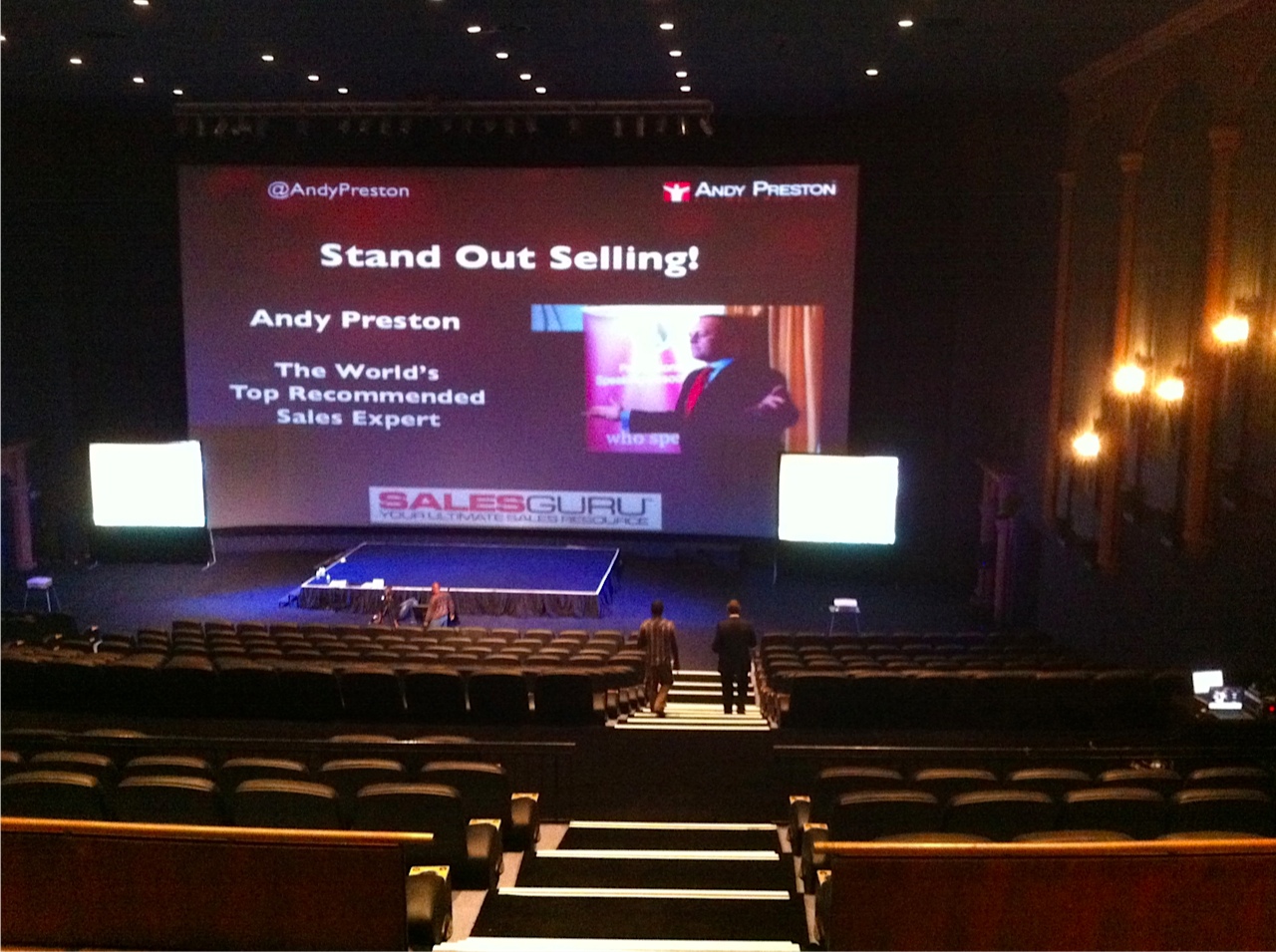
Sales Events In A Cinema In Johannesburg!

Andy spoke at another Sales event in Johannesburg, to an audience of over 600+ Salespeople, talking about how we need to change the way we sell, and how to improve our new business generation and cold calling activities! Fantastic feedback from the audience, then a quick dash to the airport to travel to the next city!

The next event Andy spoke at was in Durban….

A Barnyard Theatre In Durban!

In Durban for the first time, Andy’s speech was in a Barnyard Theatre, with a full band setup behind the curtain! Tempted as he was to pick up the guitar and play, a fantastic reception from the packed audience convinced him that his Sales speech would go down better!

A great speech with a fantastic audience – from Car Rental and Automotive Companies, Insurance Salespeople, Recruitment, IT and Telecoms Professionals, and many more came to attend Andy’s speech. A great experience in a very unusual venue!

Now it was time to go to King Shaka airport for the trip to Cape Town the following day…..

End Of Tour In Cape Town!


Another packed crowd in Cape Town, where we were standing room only for Andy’s main speech! Delegates from all over the Cape had come to hear Andy’s expertise on Cold Calling and Selling Against The Competition!

As well as the event, as a rugby fan Andy found time to watch his first Super 15 Rugby game at Newlands, between the Cape Town Stormers and the Southern Kings.

Andy found out during the game just why they’re called the ‘Stormers’ as a massive storm came in whilst the game continued!

More Work…. And Some Time Out!

While Andy was in Cape Town, we worked with a Recruitment Company and a Telecoms company – and had a number of meetings that resulted in more bookings for his next trip!

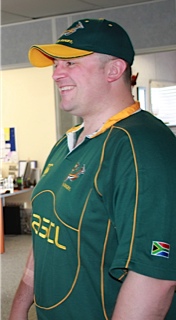
Andy also got into the South African ‘spirit’ and wore a South African rugby top and cap for one of the games!

He still remembers his first visit to Twickenham was a record win for South Africa over England – and his South African friends don’t let him forget it!

Hence the reason he was made to wear the Springbok jersey and cap!

As well as going to see some local wine estates, Andy found time to go and see a crocodile farm while he was in the Cape Town area.

He tells us he had a great time, but I’m not sure the rest of us want to get as close to the crocodiles as he did!!

The picture on the right was taken by Andy… far too close for my liking!

So What’s Next For Andy In South Africa?

Andy will next be in South Africa at the end of October and also December, so if you’re interested in meeting Andy, or booking him to help your team increase sales, get in touch with us now on
+44 161 401 0142 to see if Andy can help you as well, while he’s in South Africa!

About The Author:

Andy Preston is one of the World’s Top Recommended Sales Experts, Sales Trainer and Sales Conference Speaker

Andy Preston

Andy Preston has worked with more than 60,000 people in 16 countries over the last 10 years, helping them to increase their sales!  

He is recognised as the #1 Authority on the evolution of Cold Calling and New Business Selling, as well as being one of the World’s Top Recommended Sales Experts, and the creator of the Stand Out Selling system.

Stand Out Selling is Andy’s signature sales methodology – helping you to sell better against your competition, win more business, and do so – even when you’re a higher price!
 
This article is copyright Andy Preston 2010. To copy or syndicate this or any part of this article contact Andy Preston for guidelines.

Dec 19

LinkedIn Sales Tips – Endorsements….Useful? Or A Waste Of Time?….

By Andy Preston | Digital Selling

In this article, leading Sales Expert Andy Preston talks about LinkedIn Endorsements…. what they mean… how people interpret them….and whether they’re any use…or not!…

One of the things I’ve been asked about a lot recently, is the LinkedIn ‘Endorsement’ feature. Added to a few profiles for ‘testing’ last year (before they rolled it out fully) this has been a topic that comes up recently WHENEVER LinkedIn is mentioned!

And because so may people have asked my thoughts and opinions on it (as well as how to best leverage it, if they are going to use it), I thought it would be useful to put my answers to various people’s questions down here, so you can benefit from my thoughts on the topic too!

So here are some of the questions I’ve been asked… and my responses to them…..let me know what you think by commenting at the bottom of the article as well!

Does Anyone Like The Endorsement Feature?

I must admit, I’m personally not a huge fan of the Endorsement feature on LinkedIn. I personally feel that it actually distracts people from focussing on the more important parts of the profile – like the recommendations section – where you can get a true ‘gauge’ of that individual and what they’re like.

Unfortunately, when LinkedIn made the changes to the profile layout, they ‘forced’ the recommendations section of the profile into the lower section of your profile – so you have less control than you did over how far down (or up) your profile your recommendations appear.

Now that your Endorsements are higher up than your Recommendations, the Endorsements are one of the initial things people base some of their initial judgements about you on.

Interestingly, in this blog in the Observer, written just after the endorsement feature was launched, seems to point out that the feature just seems to encourage people back to LinkedIn itself! Making the site more ‘sticky’ and more people to use it – obviously benefiting LinkedIn itself (and it’s advertising revenue!).

Is The Endorsement Feature Reliable And Trustworthy?

I think the short answer to this is ‘no’. Unlike the Recommendation feature, where people write individual feedback (so you can make a judgement as to the ‘strength’ of the recommendation), the endorsements are done simply with a click of a button – in fact LinkedIn often ‘prompts’ you to endorse people’s skills on occasion just when you land on their profile!

This is made even worse by the fact that it’s sometimes easier to get rid of the ‘do you want to endorse xyz for..’ by clicking ‘endorse’, than it is to click ‘skip’ – as you know if you click ‘skip’ the box will appear NEXT TIME you land on that person’s profile and ask you to endorse them! Just easier to click ‘endorse’ – and lo and behold! Another meaningless endorsement!

The consequence of that, is that you get people endorsing you for skills when they have had little or no interaction with you, and have no idea if you have that skill or not! Even worse, you get endorsed for skills that you don’t actually want on your profile, just that the person endorsing you decided to endorse you for that too – it then appears on your profile – bizarre! Everyone I’ve spoken to talks about this happening to them – and everyone hates it!

If you want to turn off your endorsement feature, or delete any of them, a good article that explains how to do it quickly is here.

Will It Get Any Better With Time?

Actually, I think over time it will get worse! When the Endorsement feature was first introduced, the ‘count’ on the number of endorsements was in 3 figures, i.e. it was able to go up to 999. I know this because some of my own endorsements had over 100 endorsements on there (I have a big network of course, and I’m known for being good at what I do).


In their first revision of the feature however, LinkedIn limited it to 2 figures, so the most endorsements any skill can display is ’99+’. Nobody viewing your profile has any way of telling whether you have 100 endorsements for that skill, or 999!

You can see from the example of my own profile on the left, you can get 99+ endorsements for most (if not all) of your top skills pretty quickly – especially if you have a large network and have trained tens of thousands of people around the world like myself – it’s easy to get to the 99+ stage, fast!

It’s less of an issue for the majority of people right now however, as most people aren’t at the 99+ endorsements for each skill yet. But over time? They probably will be. Which negates any usefulness the feature might have left by that point!

Some of LinkedIn’s own thoughts on Endorsements can be viewed here.

Do You Think LinkedIn Will Remove The Feature Entirely?

I think the Endorsement feature could well be removed by LinkedIn in the future. Once people’s endorsements start to get over 99+, then I think they’ll start to see the uselessness of it!

But it appears to be here to stay… at least for now….. so we need to make sure that our Endorsements get us seen in the best light, and aren’t detrimental to persuading people to connect with us, network with us, buy into us, or buy from us – depending what your outcome is from your LinkedIn profile of course! It’s a case of Risk-Mitigation if you will.

So Andy, What Would You Suggest In Terms Of Risk Mitigation?

I think, whether we like the feature or not (and I think you’ve guessed my opinion on it by now) we need to bear in mind that people will make judgements on us (and our capabilities) based on the what we’re endorsed for, and the numbers.

Their initial judgements will be formed based on that, and backed up (or not) based on your profile summary and your recommendations. Those are the two other places people pay most attention to when looking at a LinkedIn profile as a potential buyer of your products or services for example.

So in terms of ‘risk mitigation’, I’d recommend that you ensure your ‘endorsements’ are for things that relate to your role or areas of expertise.

For example if you’re in Recruitment, ‘recruiting’ should be a skill high up (if not at the top of your endorsement list).

I know this sounds simple, but you’d be amazed how many people fall foul of it!

In the screenshot above, you can see the example of my friend and fellow International Speaker Geoff Ramm.  His top 6 endorsed skills cover the areas he specialises in, or relate to them.  5 of his top 6 relate to either Marketing (his area of expertise) or Speaking (his main method of delivering his message).  His other skill in the top 6, Entrepreneurship, relates to some of his audience.

Okay Andy, Can You Give Us Another Practical Example Of This?

Yes! I know one recruiter who is very very good at recruitment, but his LinkedIn profile doesn’t even show ‘recruiting’ as a skill to endorse! His top is endorsed skill is ‘Russian’ (he is an English guy based in Russia), so his endorsements actually say to people ‘I’m crap at recruiting, but if you want to learn Russian, I’m your guy!!’ – definitely NOT the impression he’s looking to give potential clients!

In an ideal world, while the Endorsement feature is still active, you want your endorsed skills at the top of the list to reflect the most important skills about you and what you do. For example, in this recruiters case, things like ‘recruitment’, ‘finding hidden candidates’, ‘recruitment in russia’, ‘international recruitment’ etc etc – you get the picture.

Thanks Andy, Can You Give Us Any Final Tips?

Well the people I work with most (in relation to training on LinkedIn) are salespeople, and people using LinkedIn for Lead Generation and Business Development purposes. I don’t tend to train standard courses on ‘how to use linkedin’ – anyone can do that! As part of my ‘Stand Out Selling’ sales methodology, I train how to use LinkedIn as a Sales Persuasion tool as part of your sales process – which is a very different thing entirely.

The biggest tip I can give you in relation to that, is think how your profile looks to potential buyers. Your objective (from a Sales Persuasion point of view) is to demonstrate your credibility, your professionalism, how you’ve helped people, how you’ve generated results for them etc etc. Think about the key skills they would want to see (in order to think about buying from you, or at least giving you an enquiry) and make sure they’re right at the top of the endorsements on your profile!


Good luck with your LinkedIn profile and your future sales! Oh, and if we’re not connected already, make sure you connect to me on LinkedIn as well!

And what are your thoughts on the LinkedIn Endorsements feature?  Add your comments below…..

This article is copyright Andy Preston 2014-2016. To copy or syndicate this or any part of this article contact Andy Preston for guidelines.

Apr 14

Stand Out Selling!

By Andy Preston | Andy Preston News

You may well have heard Andy speak, have read one of his articles or heard about Stand Out Selling. You may well be interested in how it works, or simply just curious about what it is!

In this article, we’ve transcribed part of an interview with Andy on the topic…..

So, What Is Stand Out Selling?

Stand Out Selling is my unique Sales Methodology, based on my background as a professional buyer, the top selling salesperson in the UK and now working all over the world to improve Sales Performance – over 50,000 people worked with in over 15 countries so far!

Its purpose is to help you stand out from your competition, close more deals, and win the business – even when you’re a higher price!

Where Does Stand Out Selling Come From?

From my own background! There are plenty of good sales methodologies and approaches on the market. Spin Selling, High Value Selling, Consultative Selling etc. I just found in my sales career that I couldn’t get any one of them to work on the majority of occasions – so I felt that I was leaving money on the table, and losing deals that I didn’t need to be losing!


That’s what made me find my own way of selling… in a market where I had over 150 direct competitors on my territory, selling pretty much the same thing…usually at a cheaper price…. that took me to the top salesperson in the country.

Then when I moved into running a sales team, I started put down what I did – to become very successful – into a process and structure of techniques, tactics and strategy that was proven to work in the majority of circumstances!

So, How Does Stand Out Selling Differ From Other Methodologies?

As I mentioned before, there are plenty of good sales methodologies on the market – although some salespeople haven’t been trained in them! The beauty of Stand Out Selling however is that it doesn’t ‘replace’ any current behaviour, strategy, techniques or sales systems you may be using (and probably getting a level of results from).

Stand Out Selling ‘fits over the top’ of them and complements them! Meaning that it can be used in conjunction with any selling style, any methodology, in any market!

The key to Stand Out Selling is that it has the ‘Person’ at its core. It’s about differentiation in the sales process, being seen as the provider of choice, and the prospect wanting to buy from you! That changes the whole selling process around, and makes it much easier!

Why Does Your System Get Better Results?

I guess if you asked my clients they say things like ‘cuts through the ‘theory-style’ sales training that often doesn’t work in the real world’, ‘helps people improve sales immediately without destroying what they do now’ and ‘deals with the biggest problems salespeople are facing right now – and solves them’.

Stand Out Selling focuses on how people make buying decisions – then aligns the sales process to that – resulting in less resistance and objections, better closing ratios and more revenue and profit at the end of the process!

It embraces ‘Digital Selling’ – ways to use digital technology to increase our ‘win chance’ in the sales process. That includes using online networking sites like LinkedIn, influencing people through ‘sales persuasive’ emails and Online Chat and other digital tools to make people more likely to buy from you!

In short, it helps you sell more, more often! Which is why that’s our company strapline, and our focus anytime we work with a client!

And as for results, I believe client testimonials speak for that, far better than I can! I’d suggest looking at the recommendations from people I’ve worked with on my LinkedIn Profile…. 275+ people can’t be wrong!

So How Do We Find Out More About Stand Out Selling?

Simply call the office on +44 (0)161 401 0142, or send me a message over LinkedIn, and I’ll be happy to see how Stand Out Selling can help you and your team Sell More, More Often!

This article is copyright Andy Preston 204-2017. To copy or syndicate this or any part of this article contact Andy Preston for guidelines.

1 … 6 7 8 9 10 … 15